May 23, 2019
Can you visit all 23 cities of Central Tokyo in one day? Sounds a little challenging. Tokyo is a big city. But let’s give it a try.
Central Tokyo consists of 23 cities (“ku” in Japanese). So, our goal will be to visit each of these 23 cities in one day. And also make some pictures, share interesting facts and quick impressions of cities we visit.
Today is Saturday. It is a fine day. Lots of sunshine. The temperature is about 30 degrees Celsius. A little hot, but not too hot. So, let’s go.
(1) Nerima-ku
Time: 10am
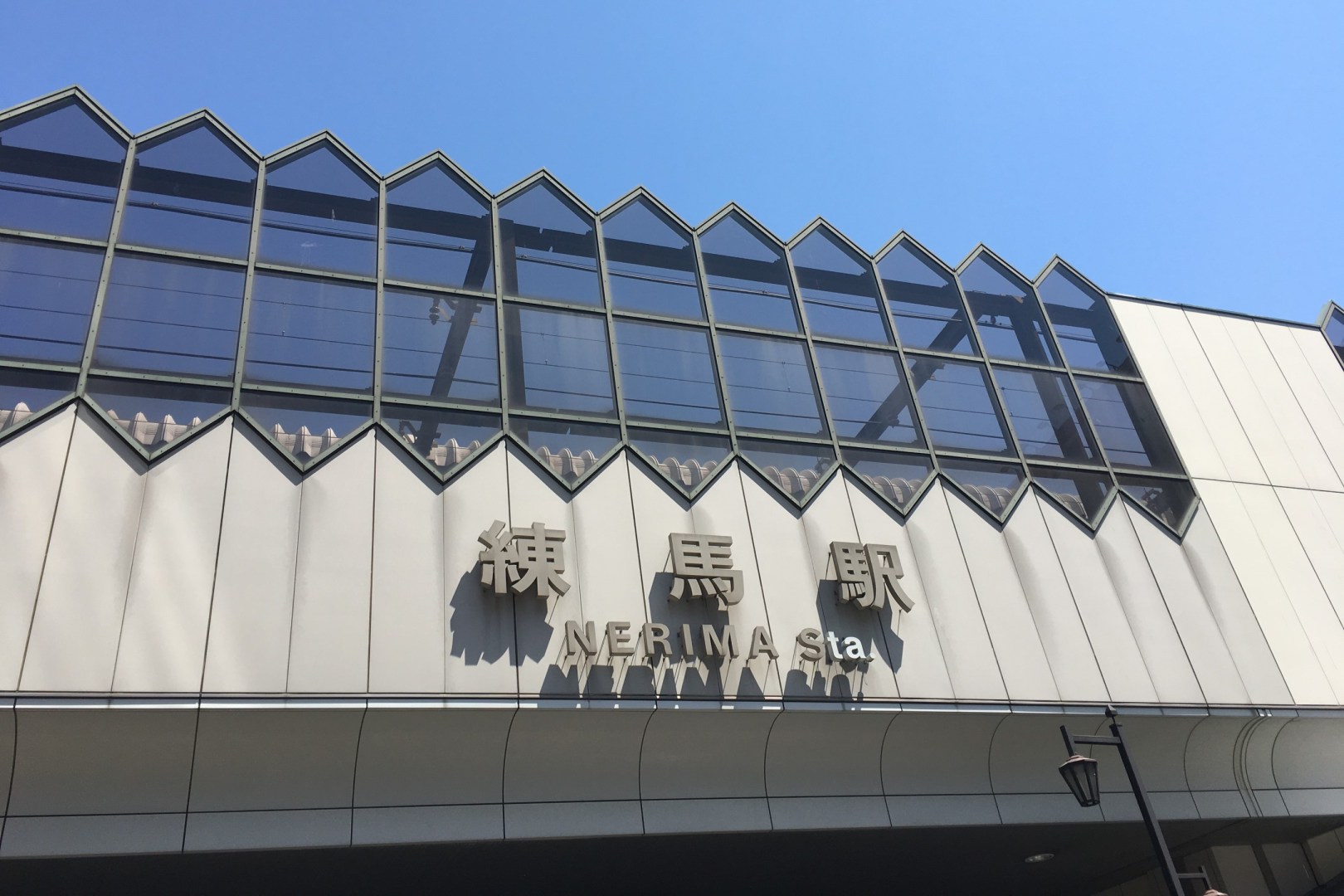
Our first stop is Nerima City. (pronounced “ne-ri-MA”)
We start our trip at the Nerima Station ( Map ).
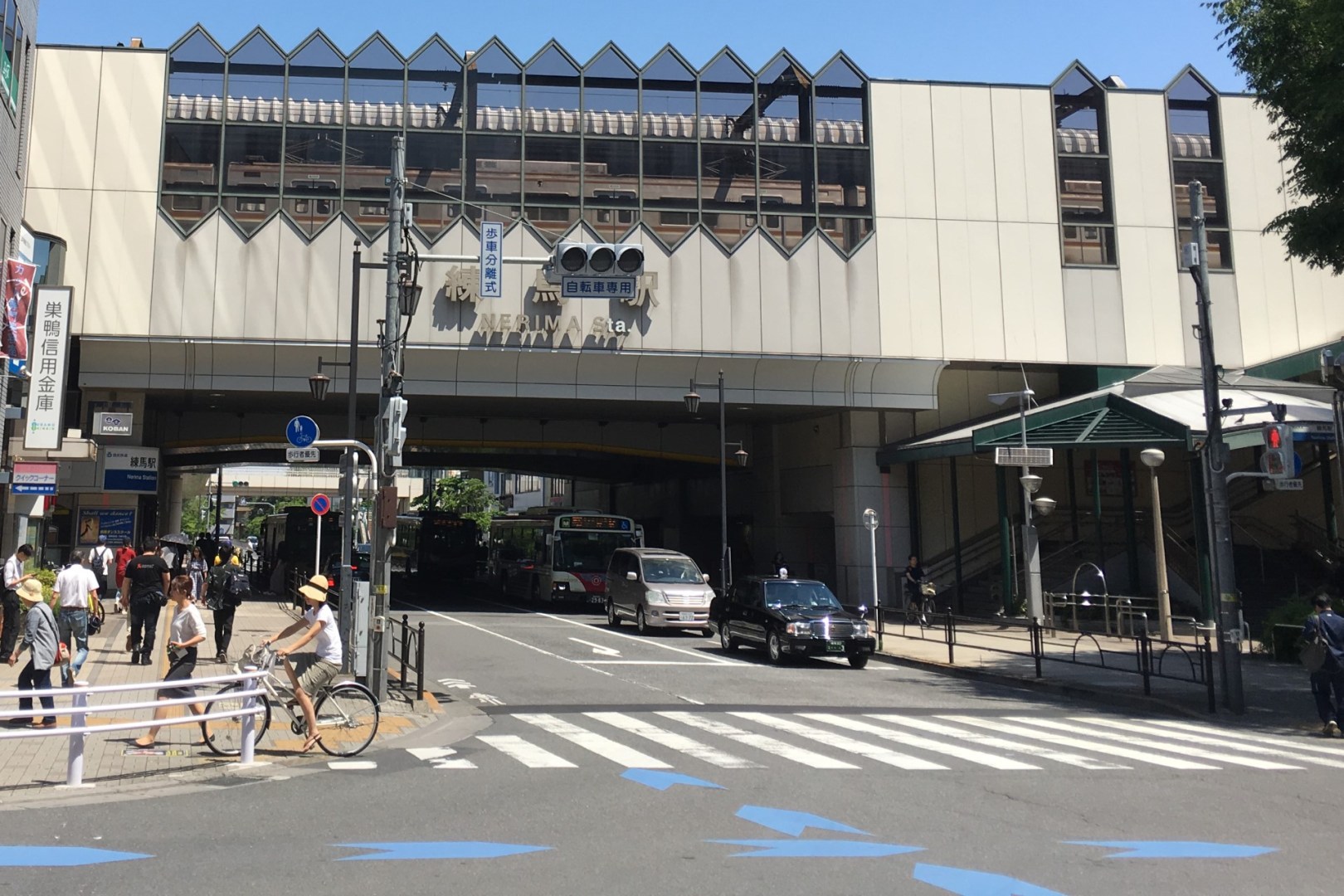
The area south of the station, where we are now, is a mix of apartments, office buildings and houses.

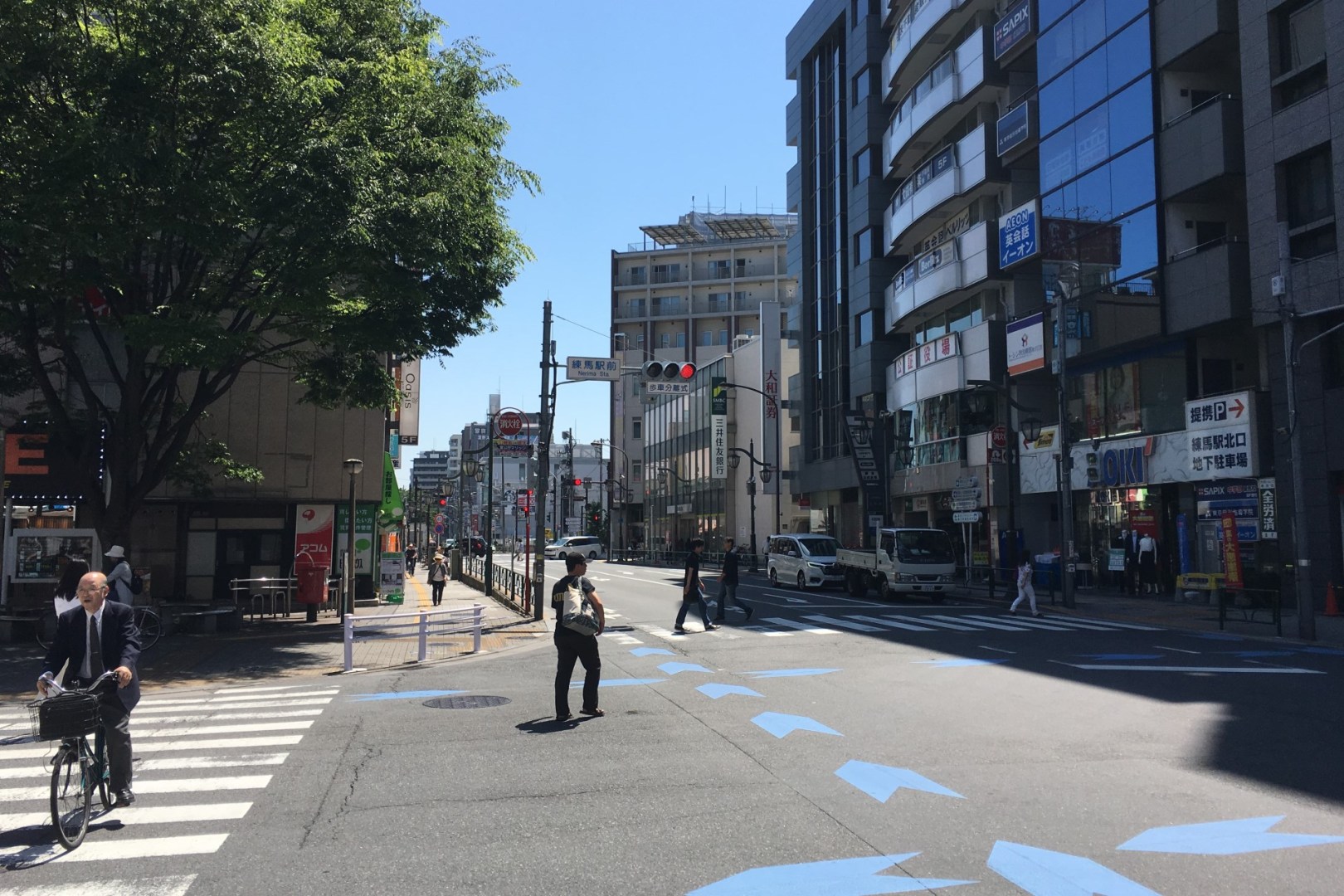
I visited different neighborhoods of Nerima-ku earlier. My impression is that Nerima is the best city in Central Tokyo to see an interesting mix of urban and rural landscapes.
You won’t see it here, around Nerima Station, but there are plenty of small farms in other parts of the city. You will find all sorts of vegetables, fruits, berries, grains and flowers, growing right next to apartments and houses.
The Urban Agriculture World Summit of 2019 is hosted by Nerima City.
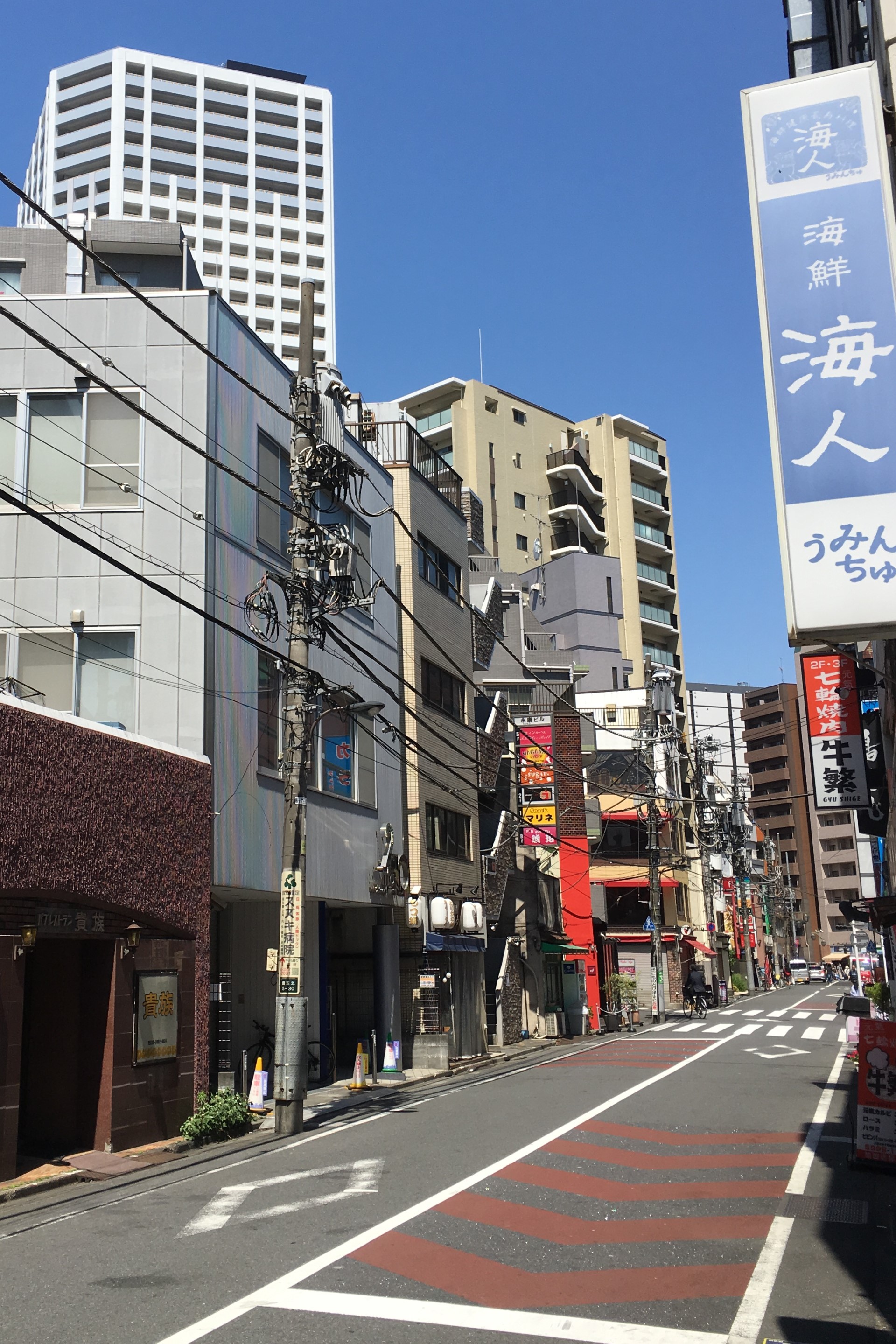
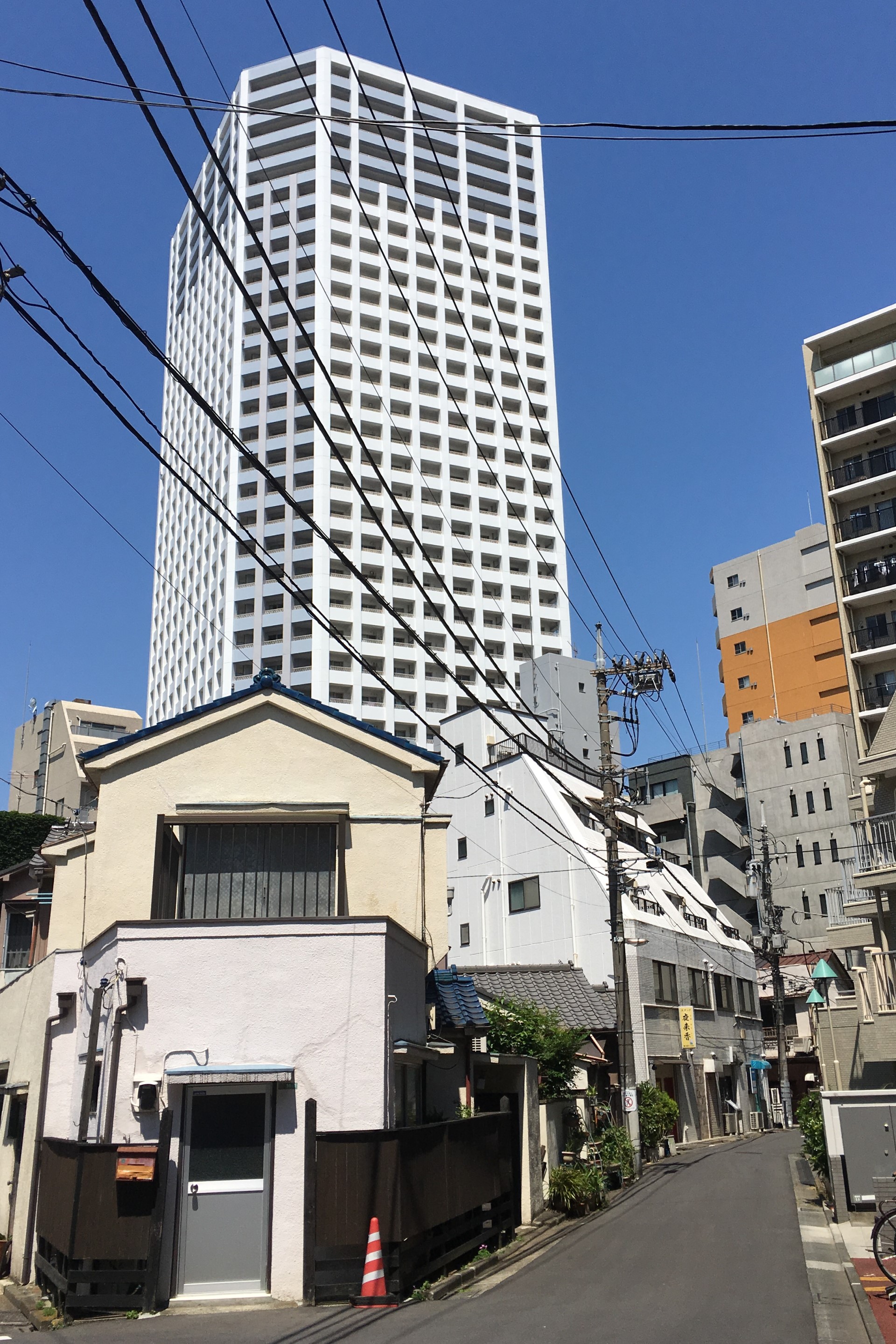
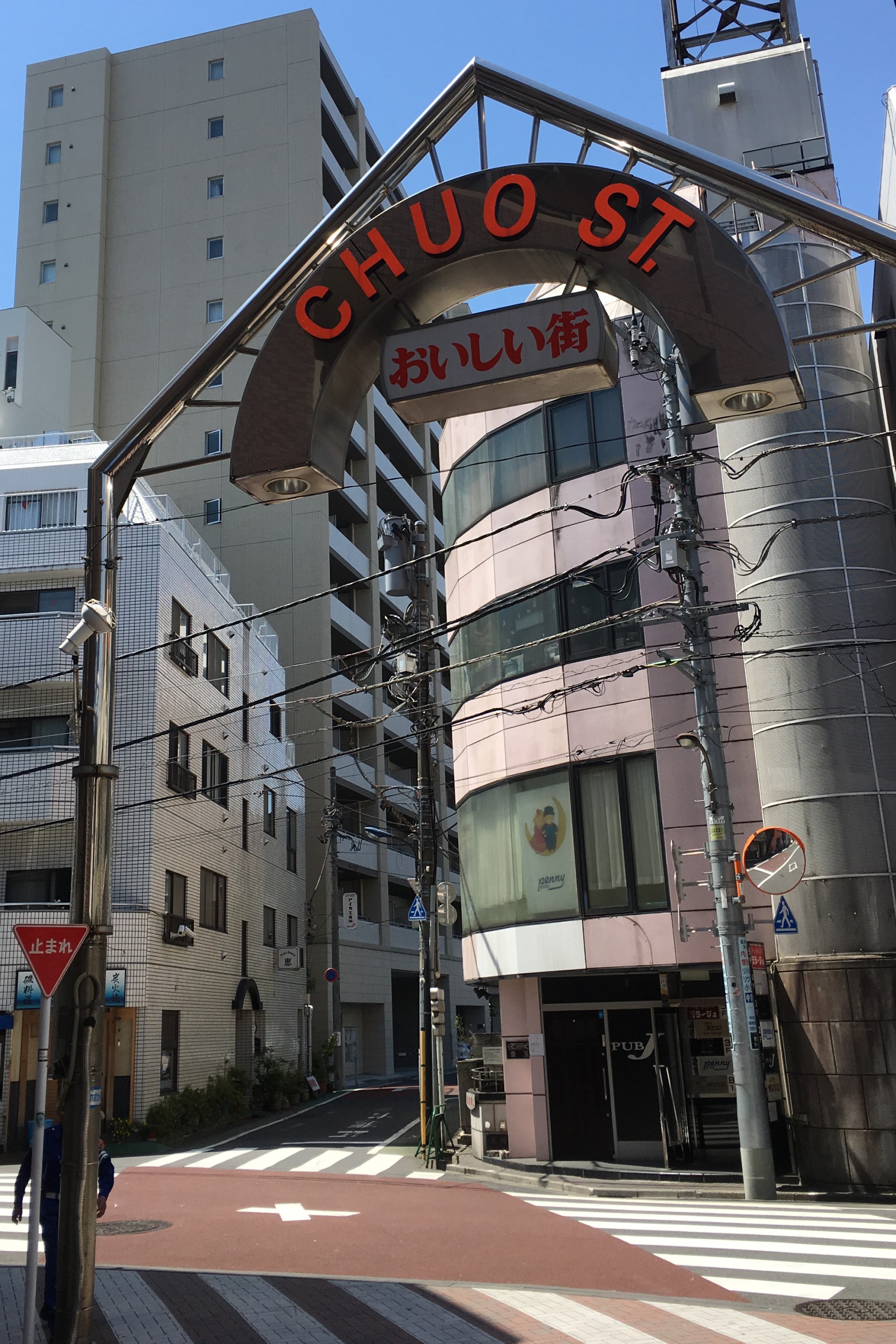
There is a street here, called Chuo Dori, or “Central Street” in Japanese. It is a shopping street, but no people are here at the moment. Not really sure why. May be it is a little too early.

Despite having a lot of rural landscapes, Nerima-ku has the second largest population among all 23 cities of Central Tokyo. About 730 thousand people live here. Only Setagaya-ku has a larger population.
The westernmost street in the 23-ku area (Central Tokyo) is located in Nishioizumi (pronounced ni-SHI oi-ZU-mi) district of Nerima-ku.
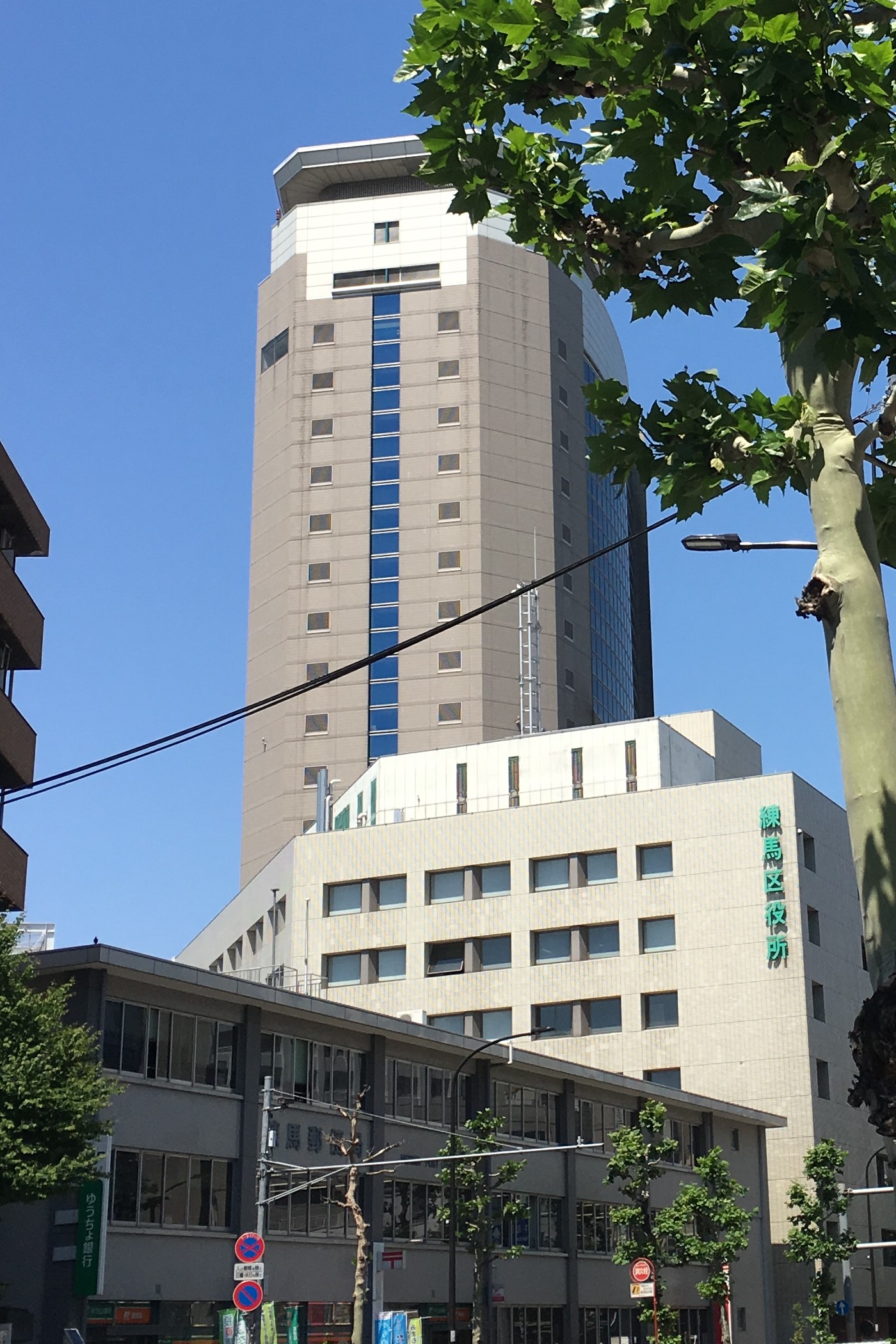
And this tall building is Nerima City office.
So, we walked around the city center of Nerima a little.
Now we are going to Nerima Station, and we are taking Seibu-Ikebukuro Line train to Ikebukuro. It will take about 7 minutes to get there.
(2) Toshima-ku
Time: 10.25am
Ikebukuro (pronounced “ike-BU-kuro”) Station ( Map ) is one of the largest transportation hubs in Tokyo. It has 6 railway lines and 3 subway lines. Obviously, the station gets really crowded every day.
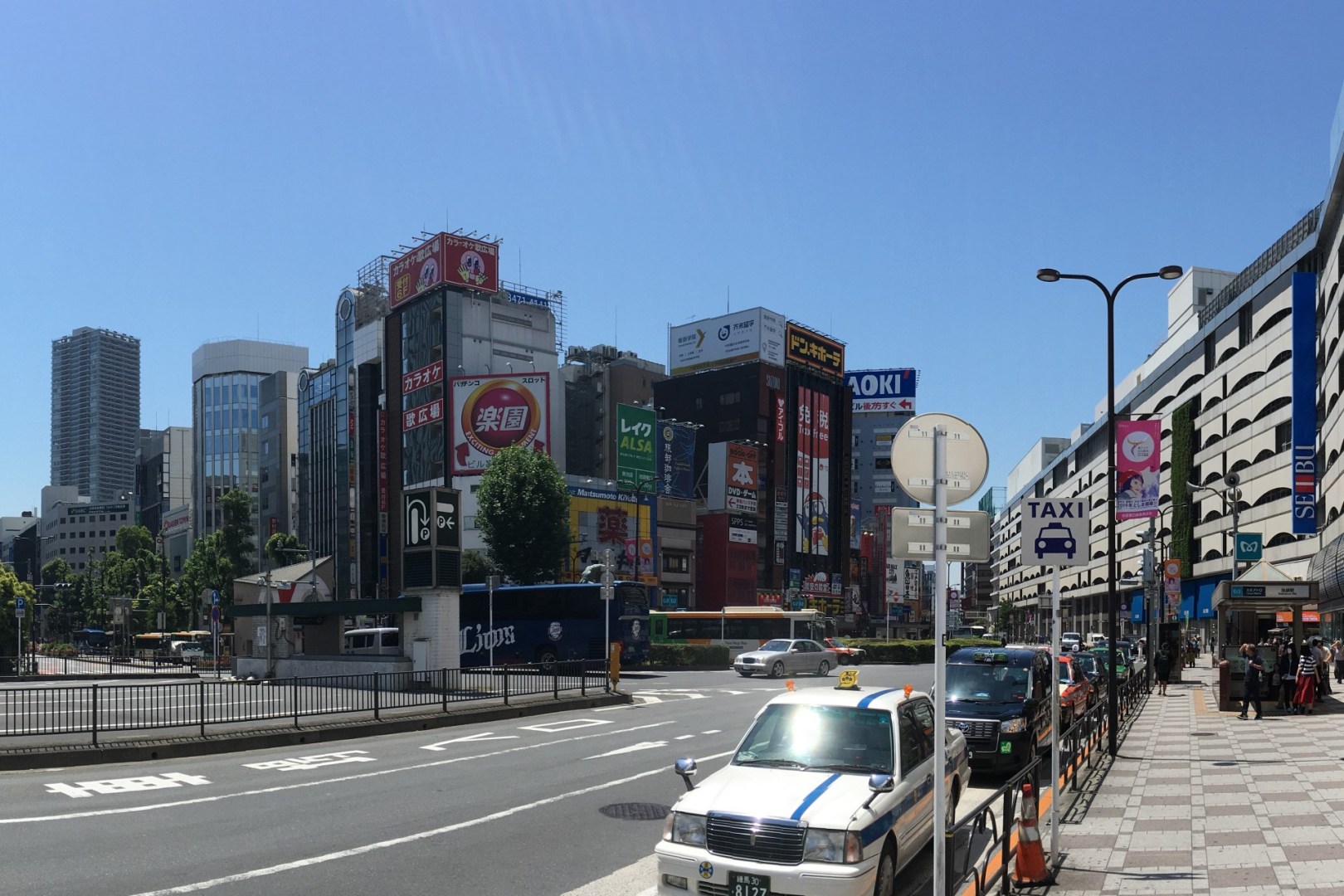
Statistically, more than two million passengers a day go through the Ikebukuro station. But now it is Saturday morning. The station and the area around it do not seem to be too busy.
There are a lot of department stores, restaurants, and movie theaters nearby. Ikebukuro is, pretty much, the center of Toshima-ku (pronounced “TO-shima). And Toshima is the Culture City of East Asia 2019.

What else can I tell you about Toshima-ku?
It has the highest population density among all cities in Central Tokyo.
Toshima-ku has more Yamanote Line stations (five) than any other city in Tokyo. Yamanote Line (pronounced “yama-NO-te”) is a loop railway line that connects many central areas of Tokyo.

I also recommend a tram ride on Toden-Arakawa Line.
This line has 30 stops, and nine of them are in Toshima-ku.
Otsuka (pronounced O-tska) ( Map ) is a very convenient place to transfer from the Yamanote Line to the tram line.
So, we visited Ikebukuro in Toshima-ku today, and now we will continue from here to the next city.
We will take Tobu-Tojo Line to Oyama station.
(3) Itabashi-ku
Time: 11.10am
We have arrived at Oyama station ( Map ) in Itabashi-ku (pronounced “ita-BA-shi”), and we are now walking towards Itabashi City office.
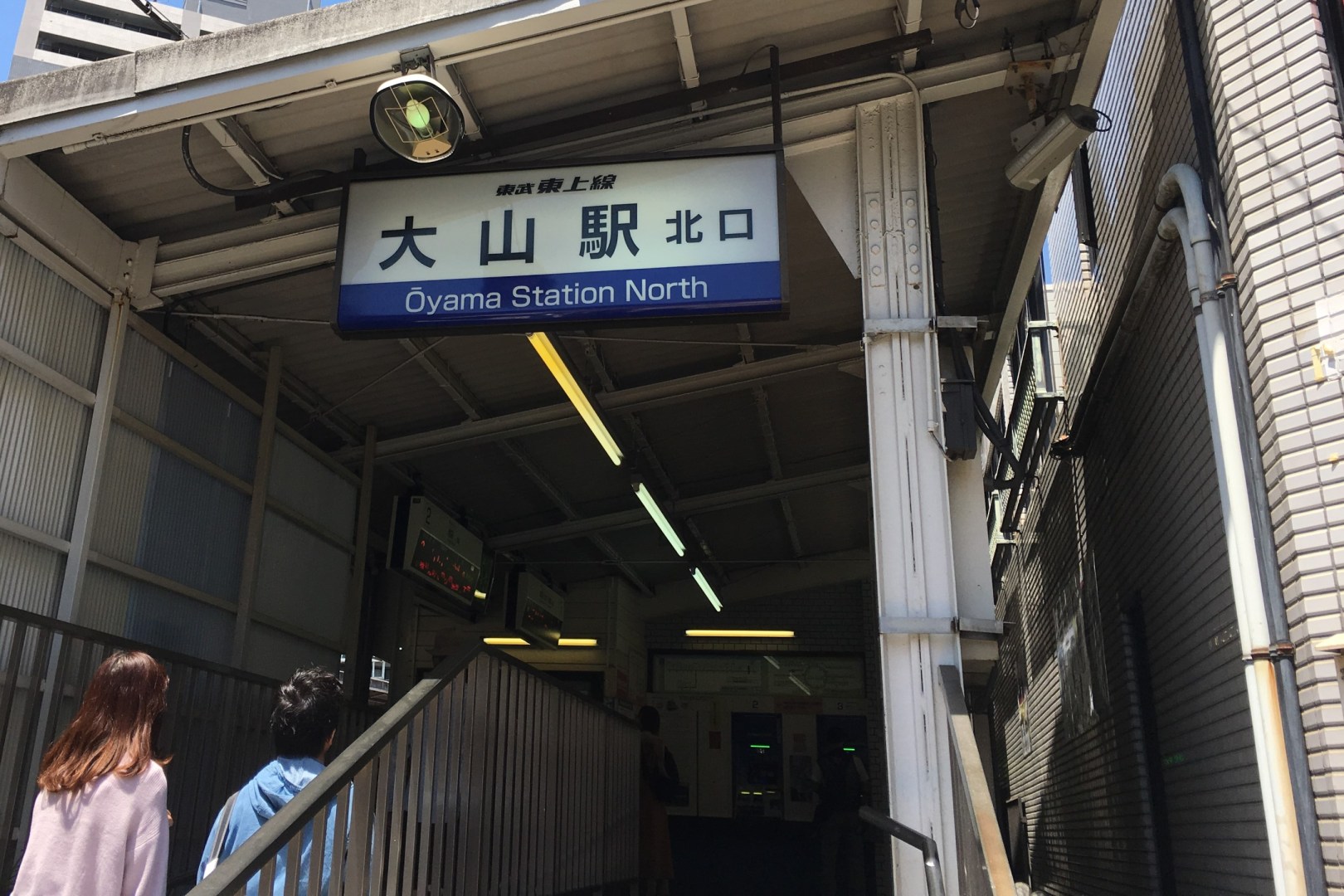
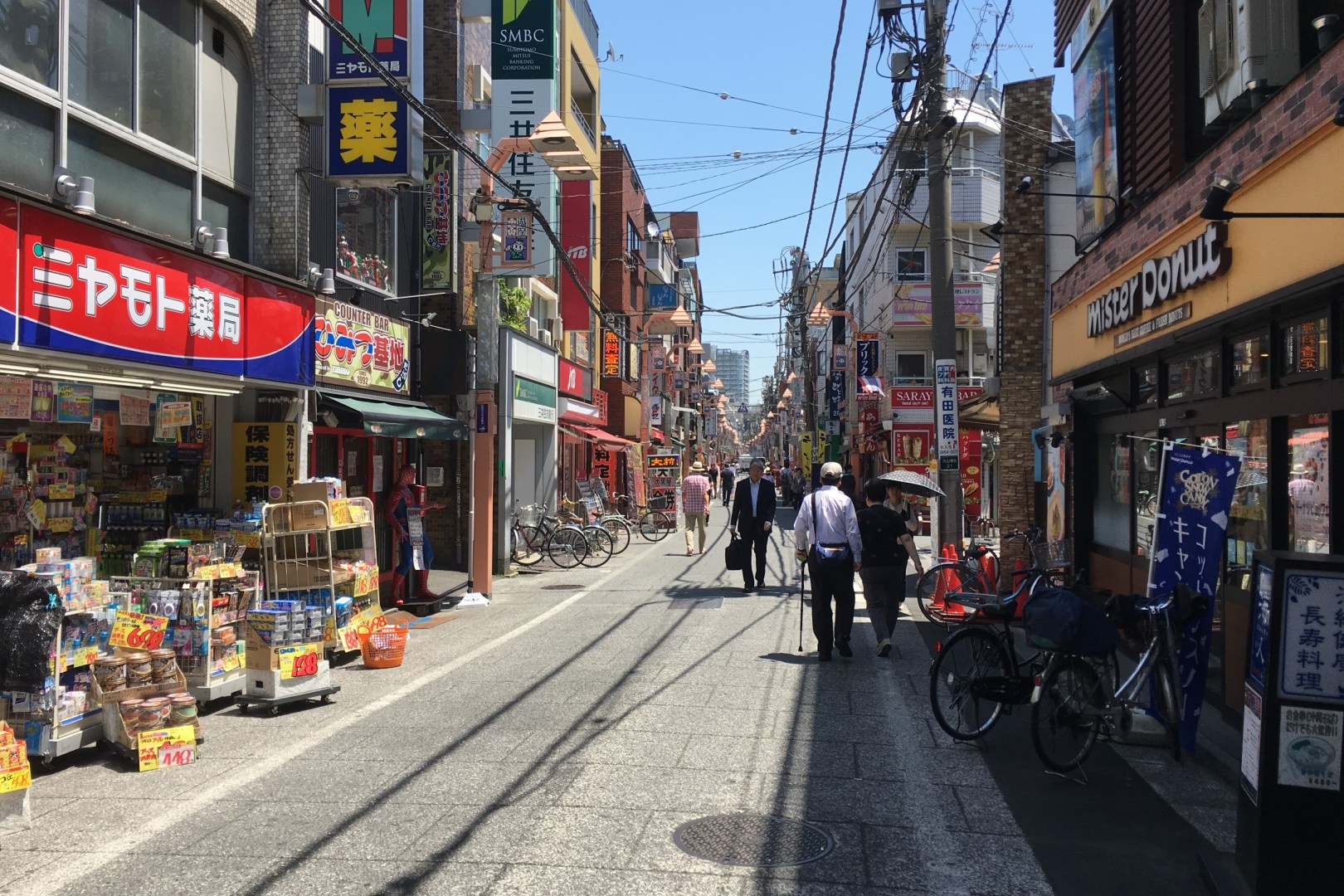
There is a shopping street here. It does not look empty, but does not look crowded, either.


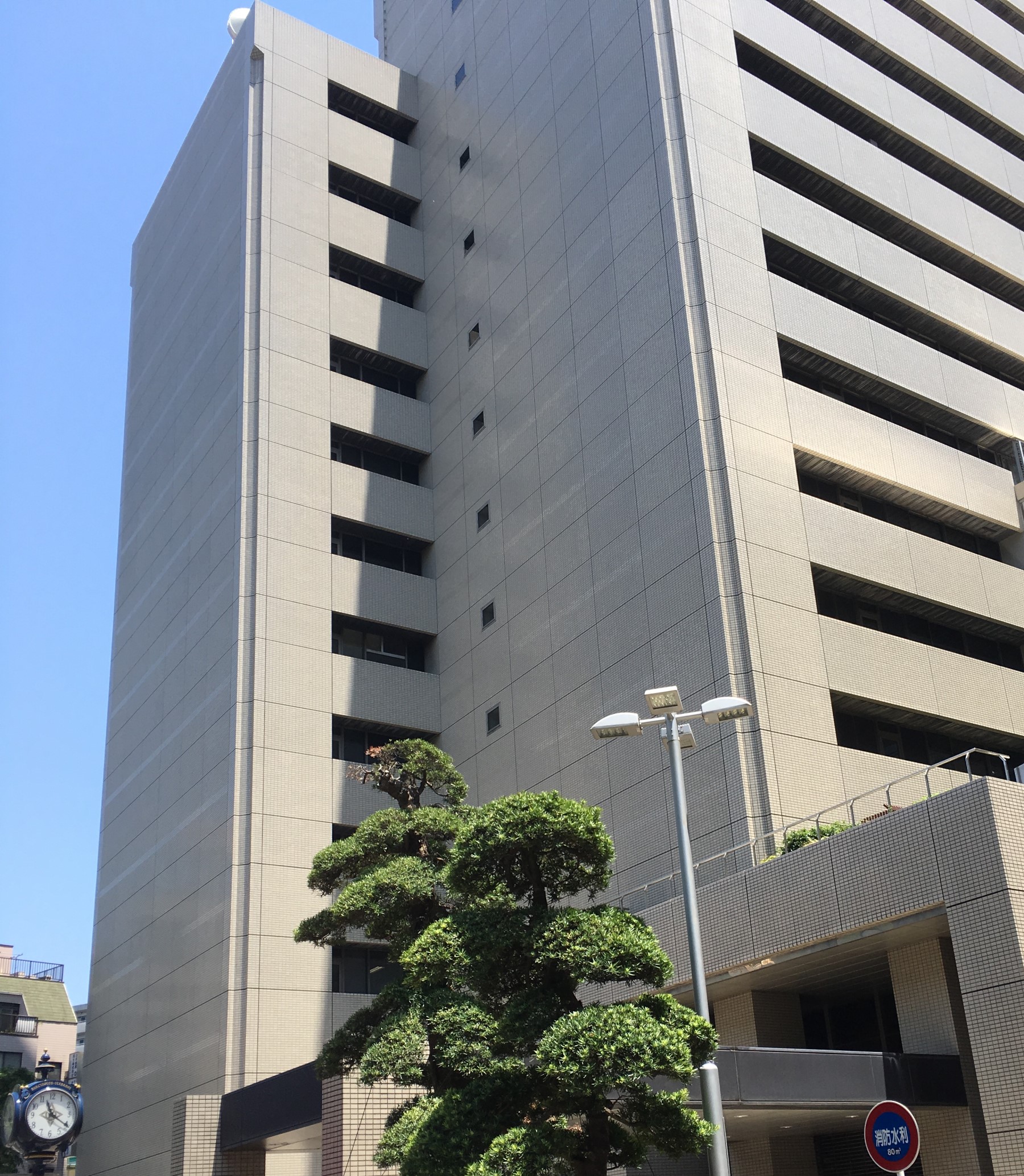
This building is the Itabashi City office.
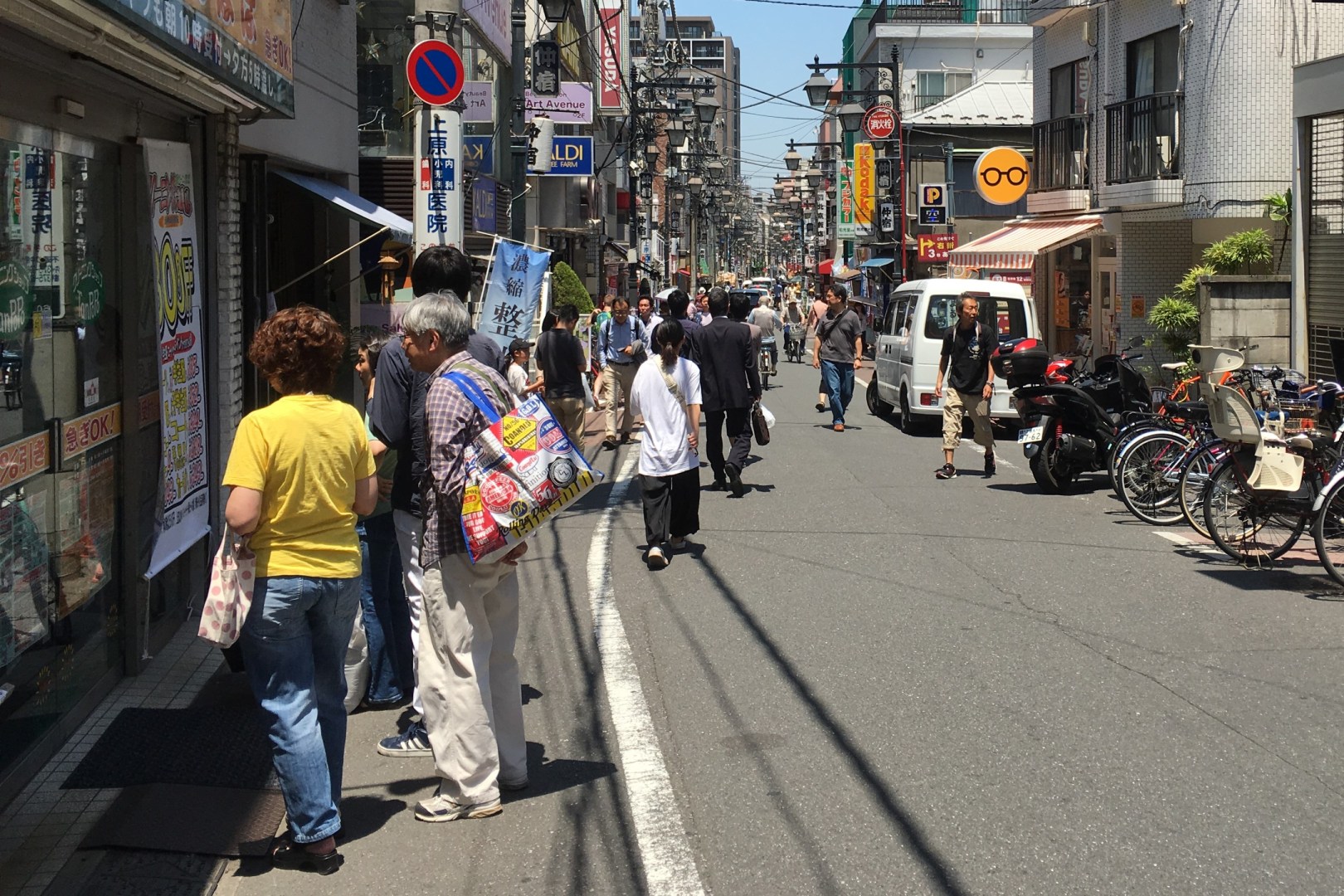
We keep walking, and soon we find another shopping street. This one seems to be more crowded.
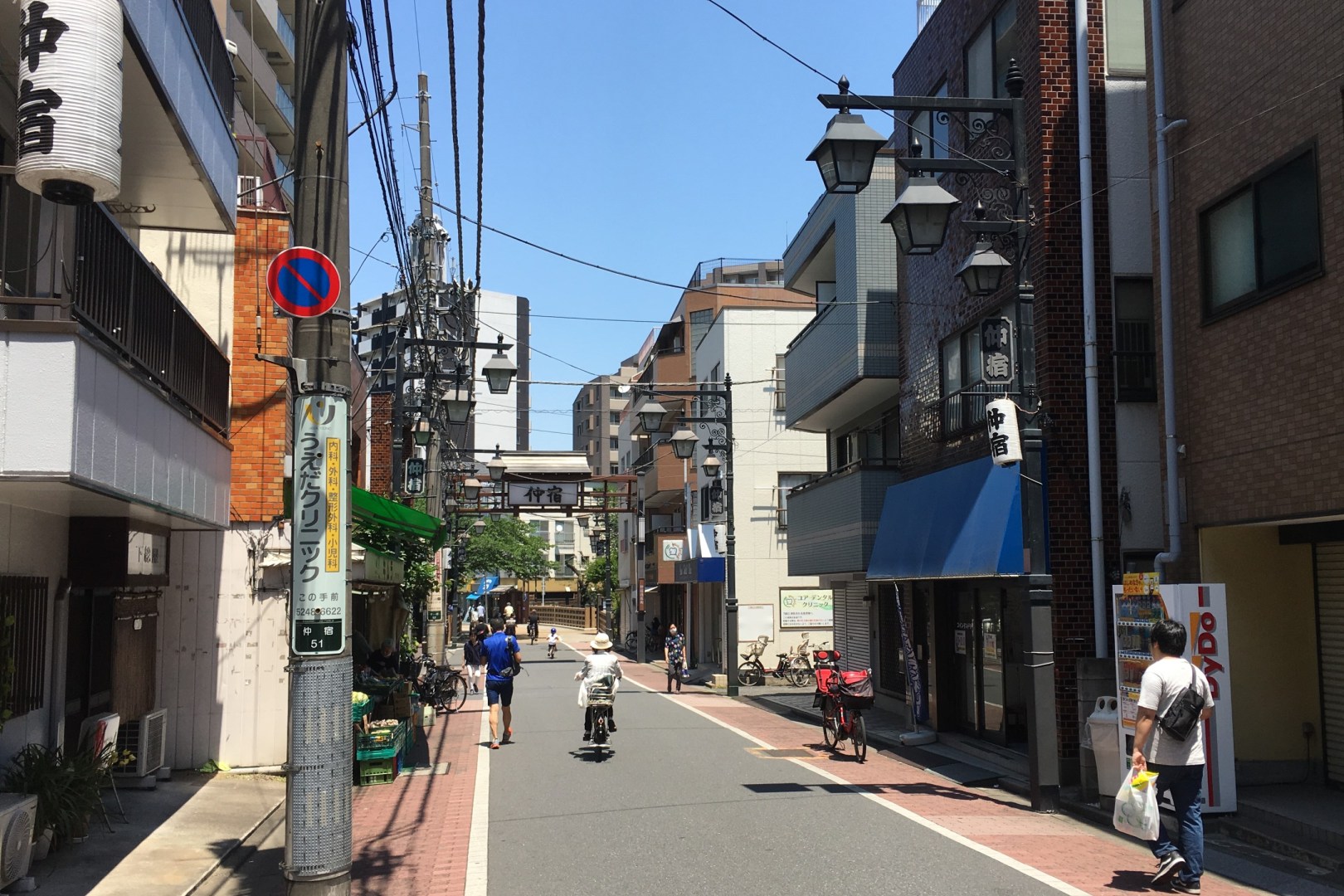
Perhaps, you might be wondering, why are we walking along the sunny streets of Itabashi-ku, and not continuing to other cities of Tokyo? Well, we are looking for one particular place here. And we found it.
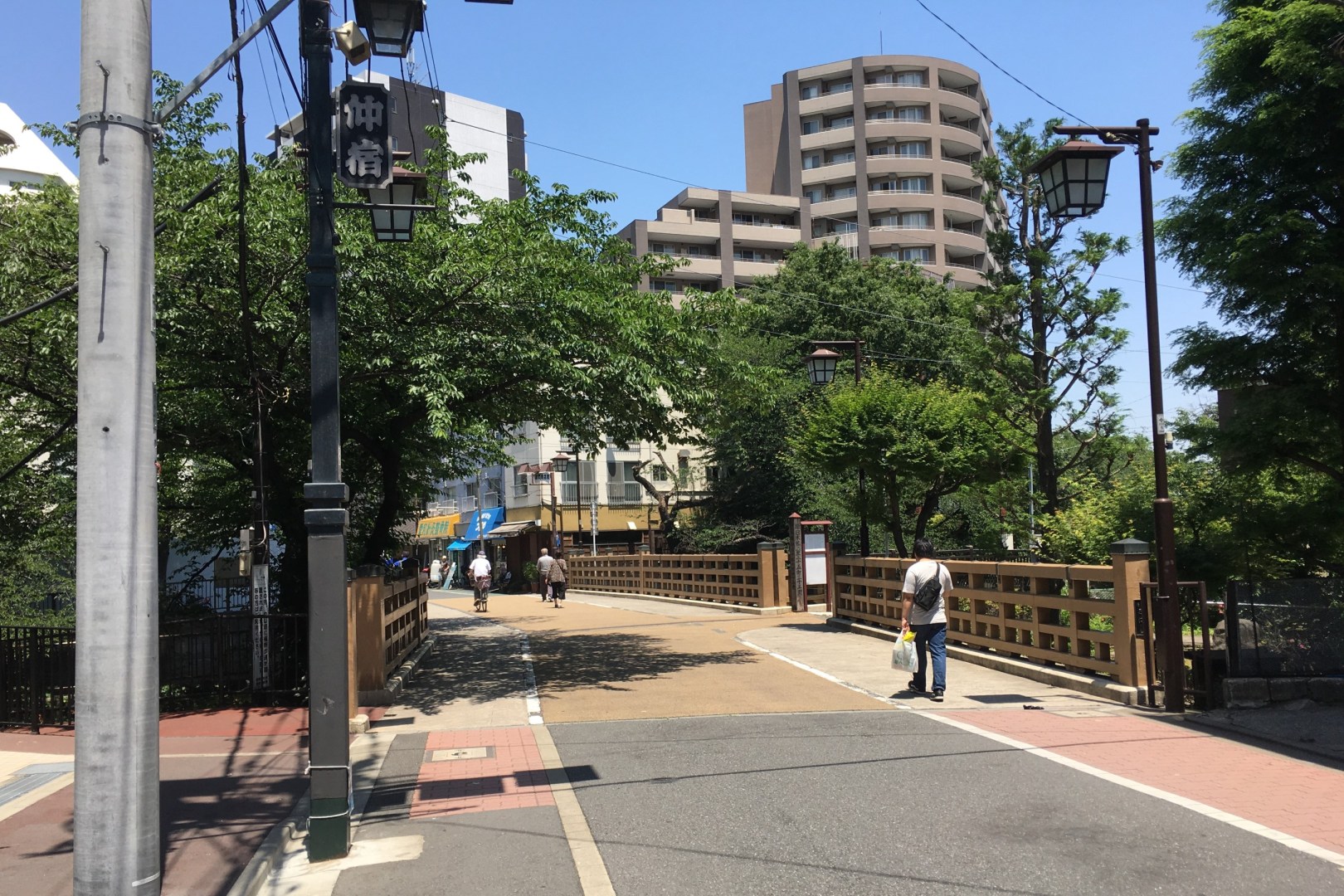
It is the Itabashi Bridge. This is actually my first time here.
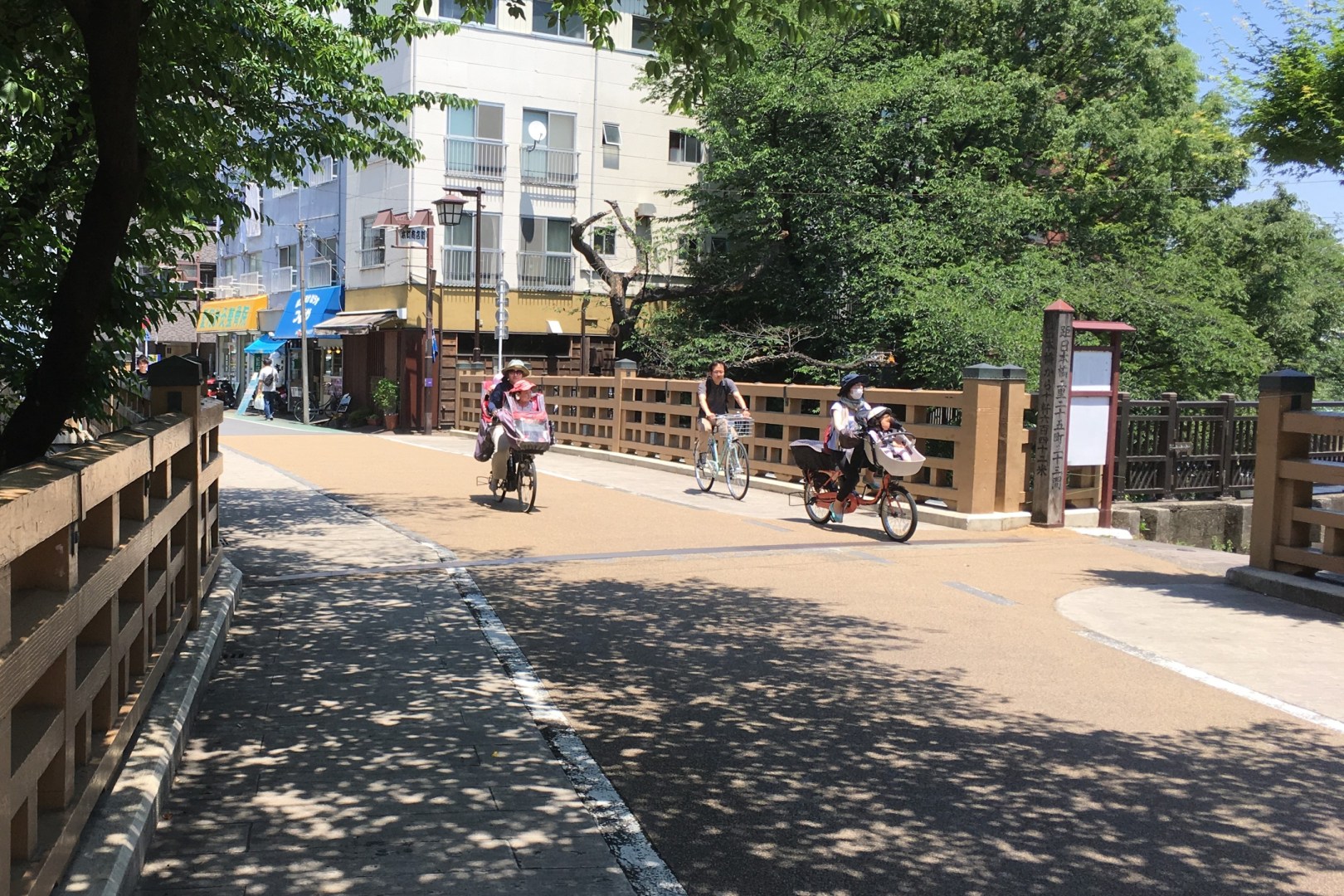
Did you notice that the bridge and the city share the same name?
Some time ago, there were cities in Tokyo such as Nihonbashi-ku and Kyobashi-ku. These are famous bridges and the cities were named after them. But in the present-day Tokyo, I believe, only Itabashi-ku has this kind of characteristic.
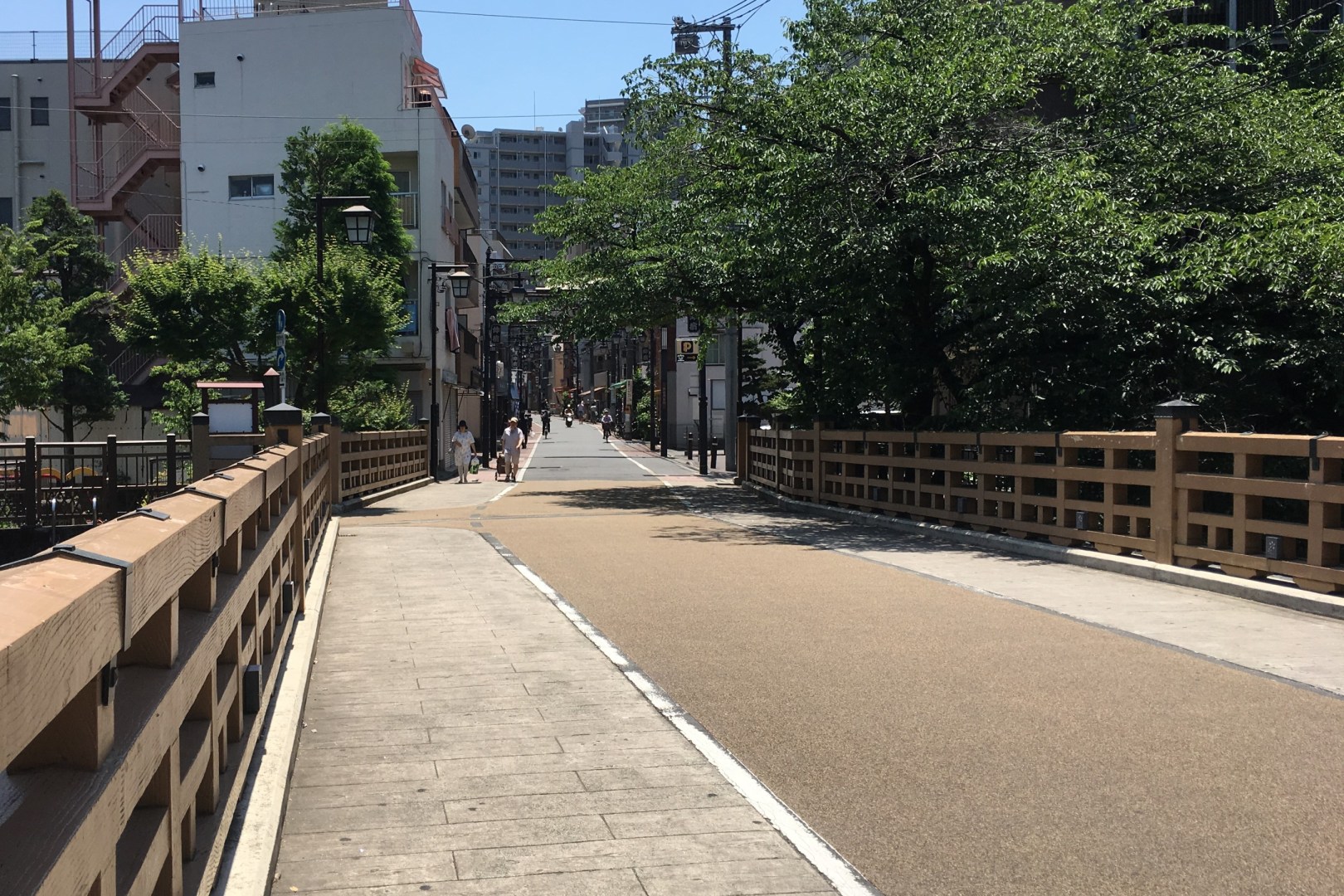
The bridge, obviously, is one of the most famous places in this city. And it does looks nice on a sunny day, doesn’t it?
Itabashi-ku has a sister city in Canada – Burlington, Ontario. In 1997 the Canadian city decided to name one the city streets “The Itabashi Way”. Itabashi-ku, in turn, donated a small copy of the Itabashi Bridge to one of the city parks in Burlington. ( Map )
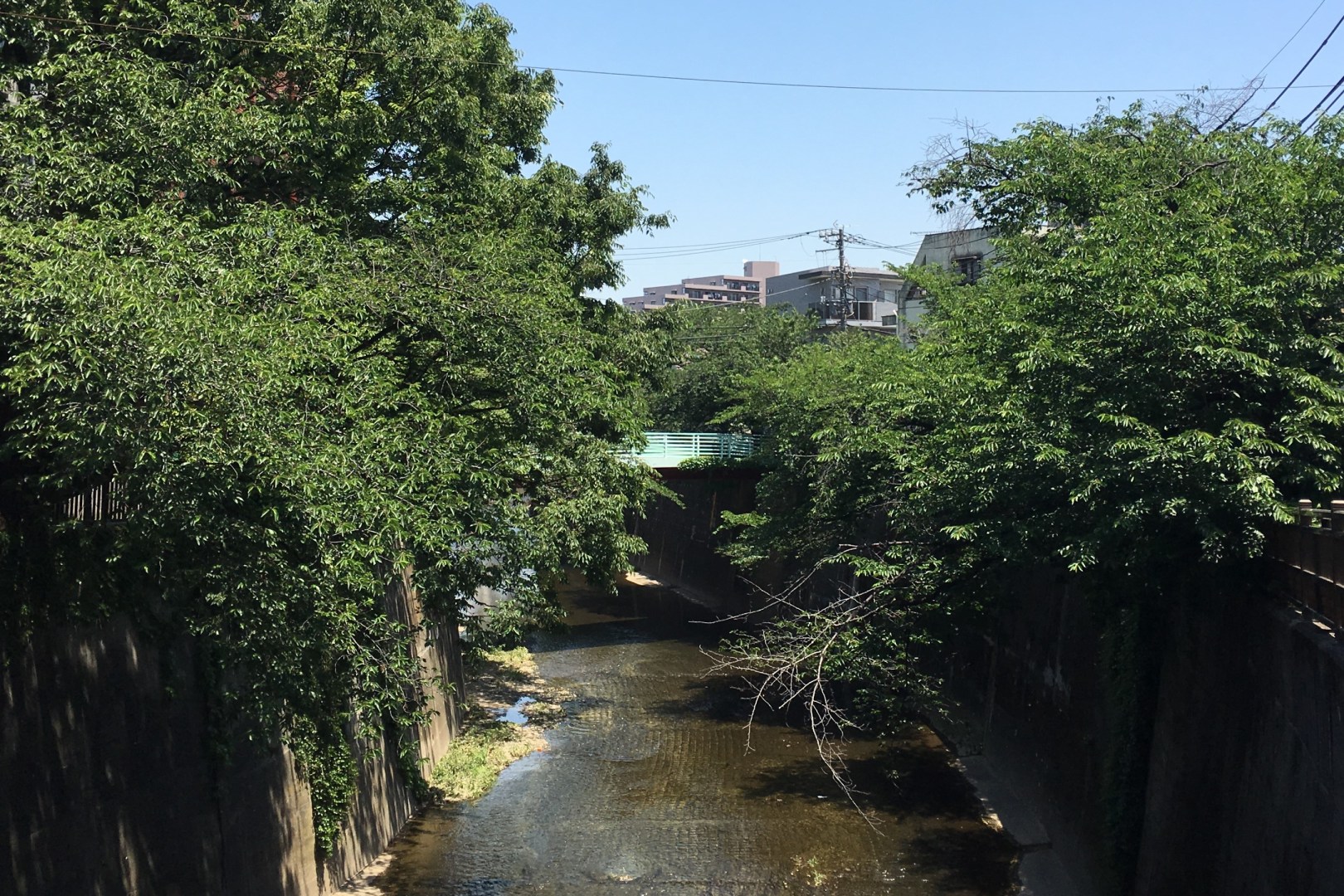
You can see a lot of cherry trees here. This place should look even more impressive during the cherry blossom season.
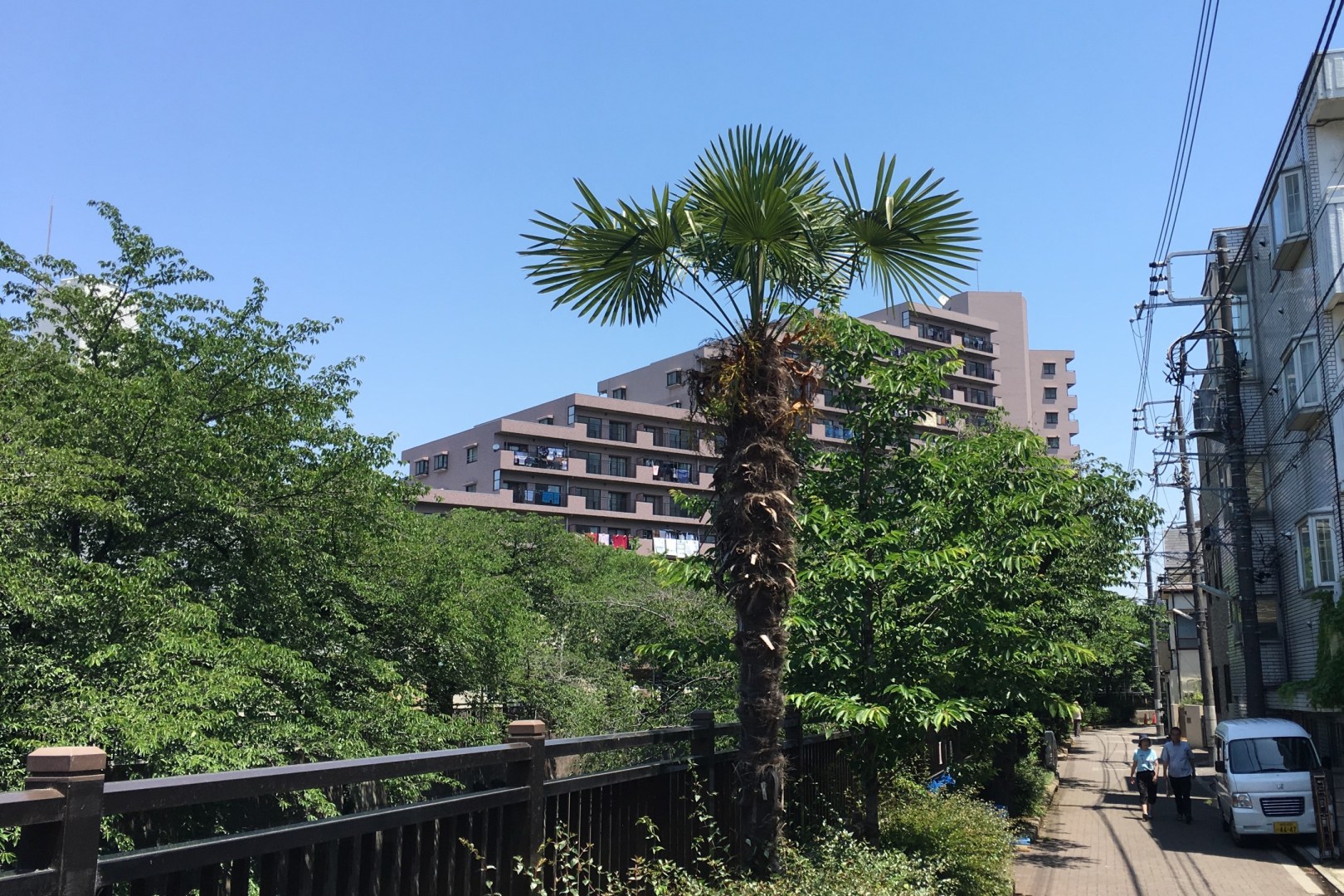
OK, it is time to continue our journey around 23 cities.
We are walking along the Shakujii River now, and we will reach the next city on our itinerary soon.
(4) Kita-ku
Time: 11.50am
Now we are in Kita-ku (pronounced “ki-TA”)
“Kita” means “North” in Japanese. Yet, the northernmost street in Central Tokyo is not in Kita-ku.
It is in a different city. We plan to visit this city later today.
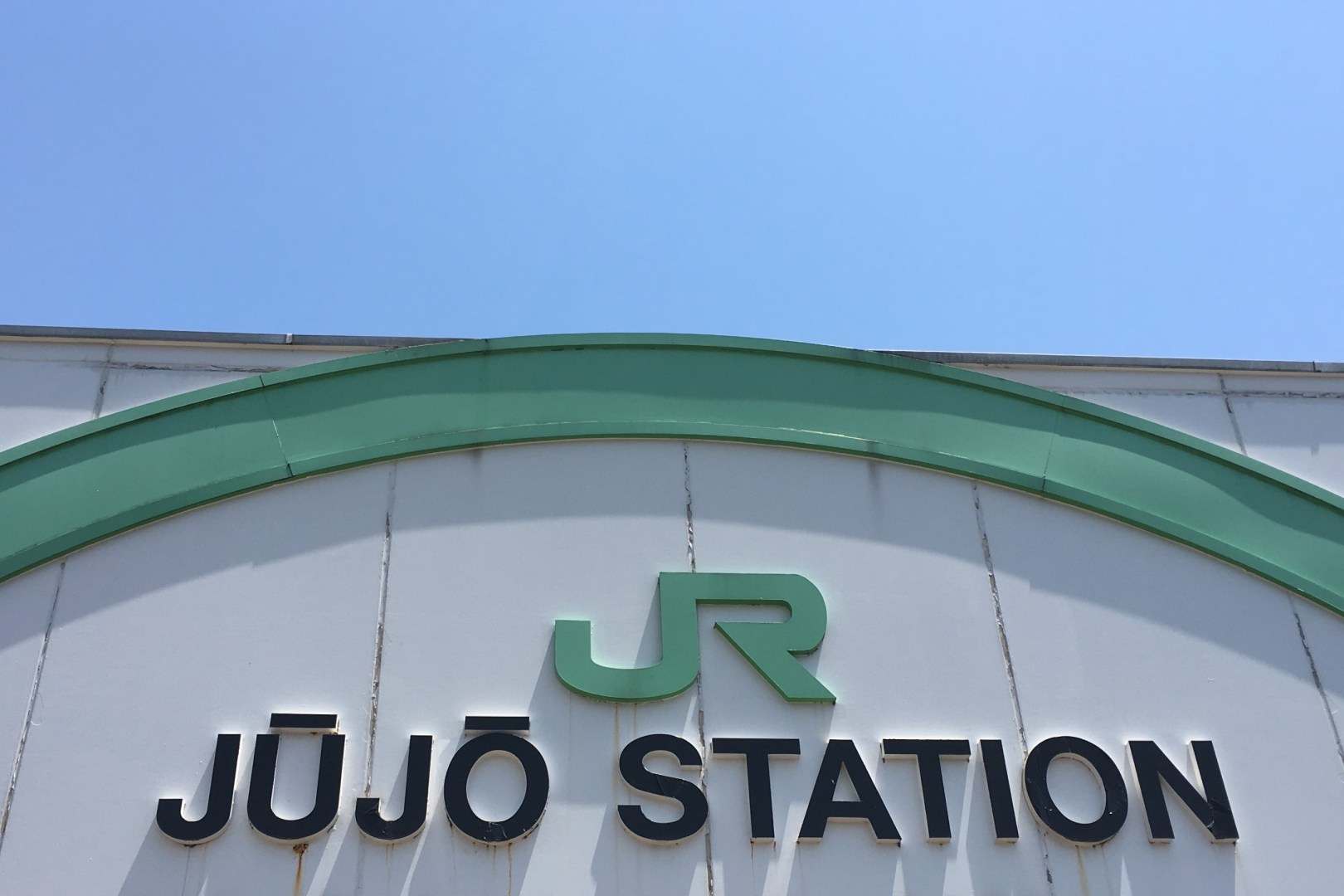
This is the Jujo Station (pronounced JU-u JO-o) ( Map ) on the JR Saikyo Line.
We don’t really have much time to spend in Kita-ku today, since we have 19 other cities to visit. So, we will just take a quick tour around the Jujo Station area.
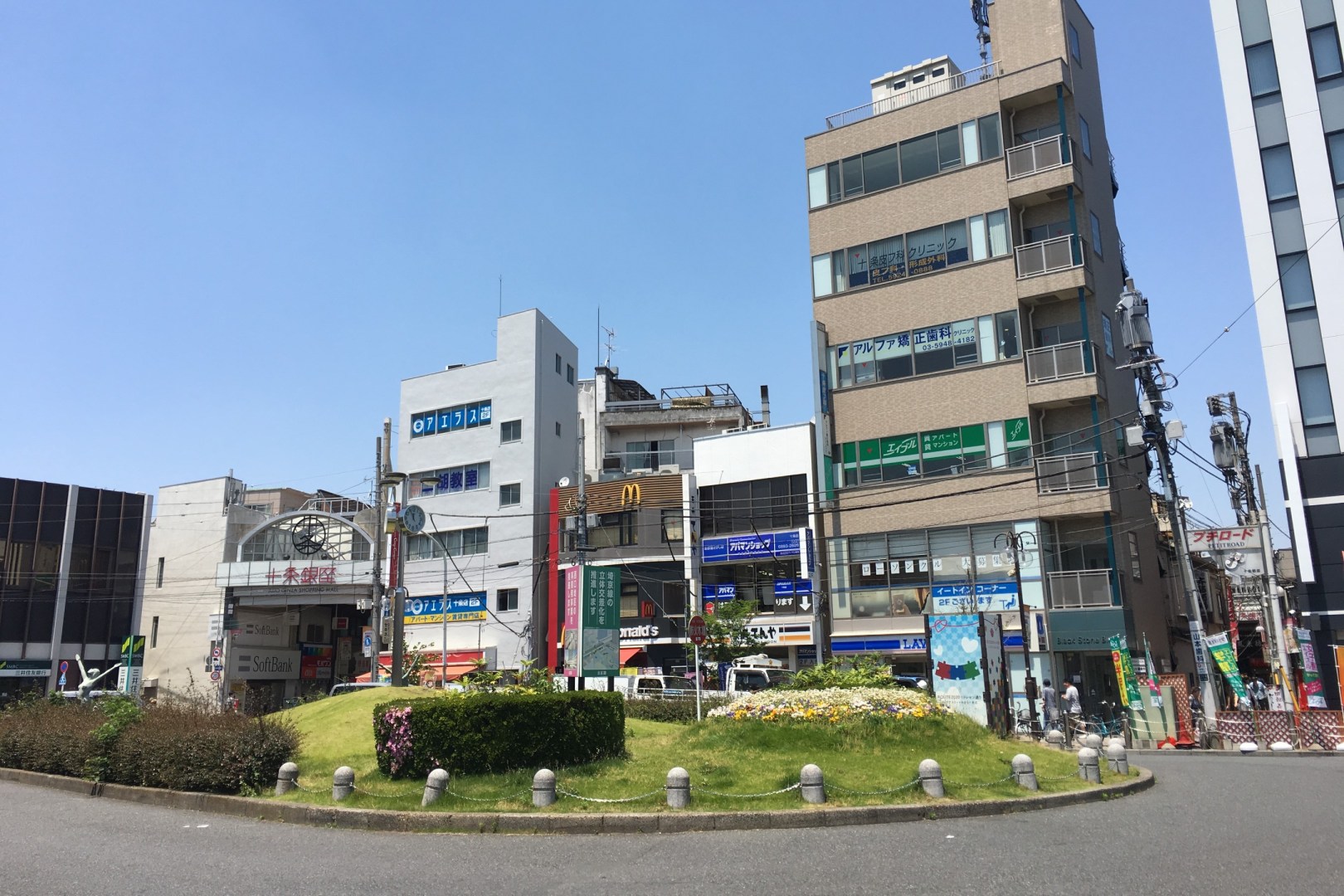
Do you want to know one interesting thing about Kita-ku?
It is the only city in Tokyo that has both a Yamanote Line station (Tabata) and a border with another prefecture (Saitama).
If you are not really familiar with Tokyo geography, here is a simpler way of understanding it. Kita-ku is quite spread out from north to south, from a border with Saitama to the centrally-located Yamanote Line.
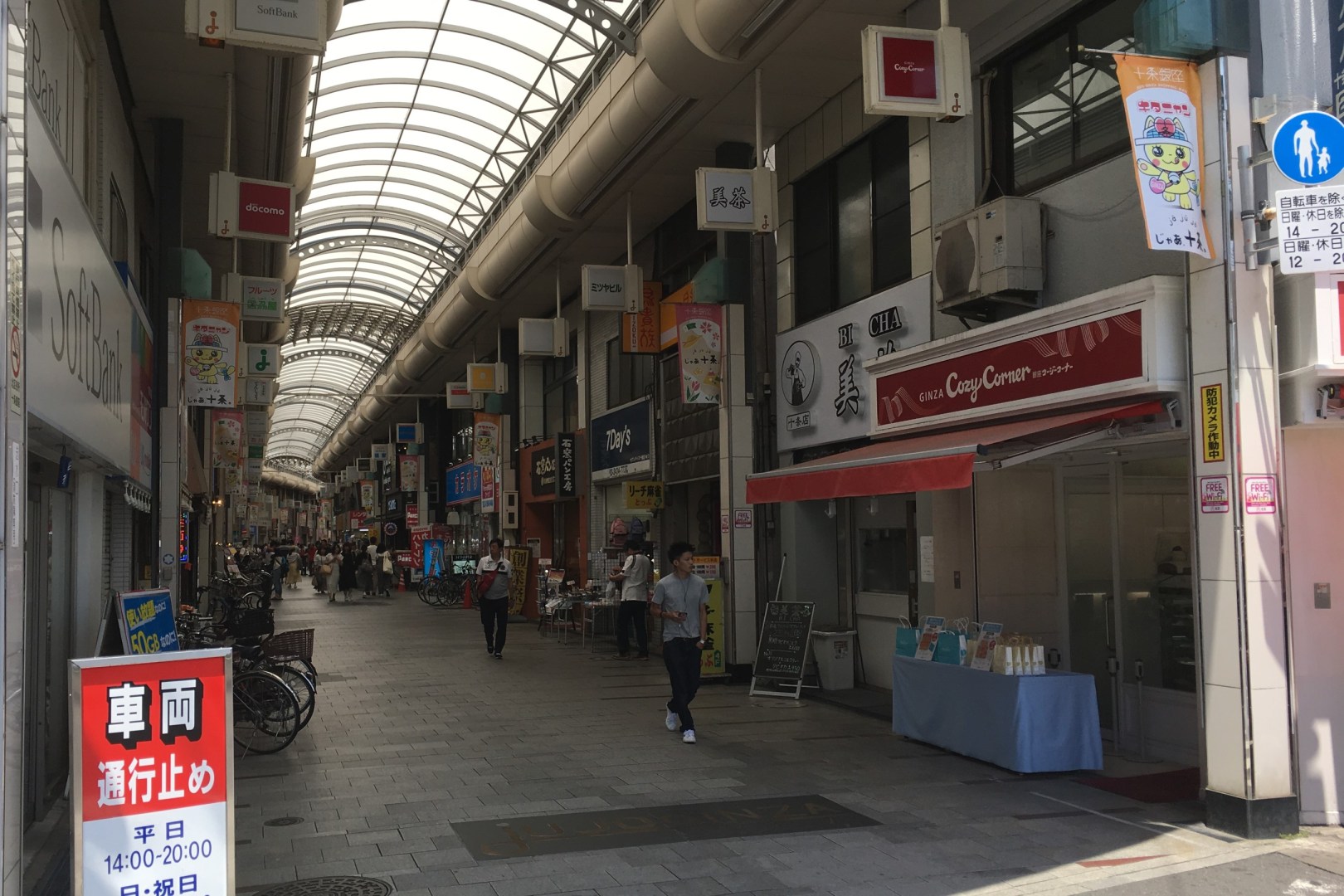
If I had to recommend some places to visit in Kita-ku, I would choose Ukima Park and Asukayama Park.
Ukima Park is one of the most beautiful parks I have visited in Tokyo so far. It is located both in Kita-ku and Itabashi-ku.
But these two parks are pretty far from the Jujo Station, where we are now.
So, we are going to take the Saikyo Line train from here to Shinjuku Station. Then, we will transfer to Chuo Line to get the next city.
 understand.tokyo